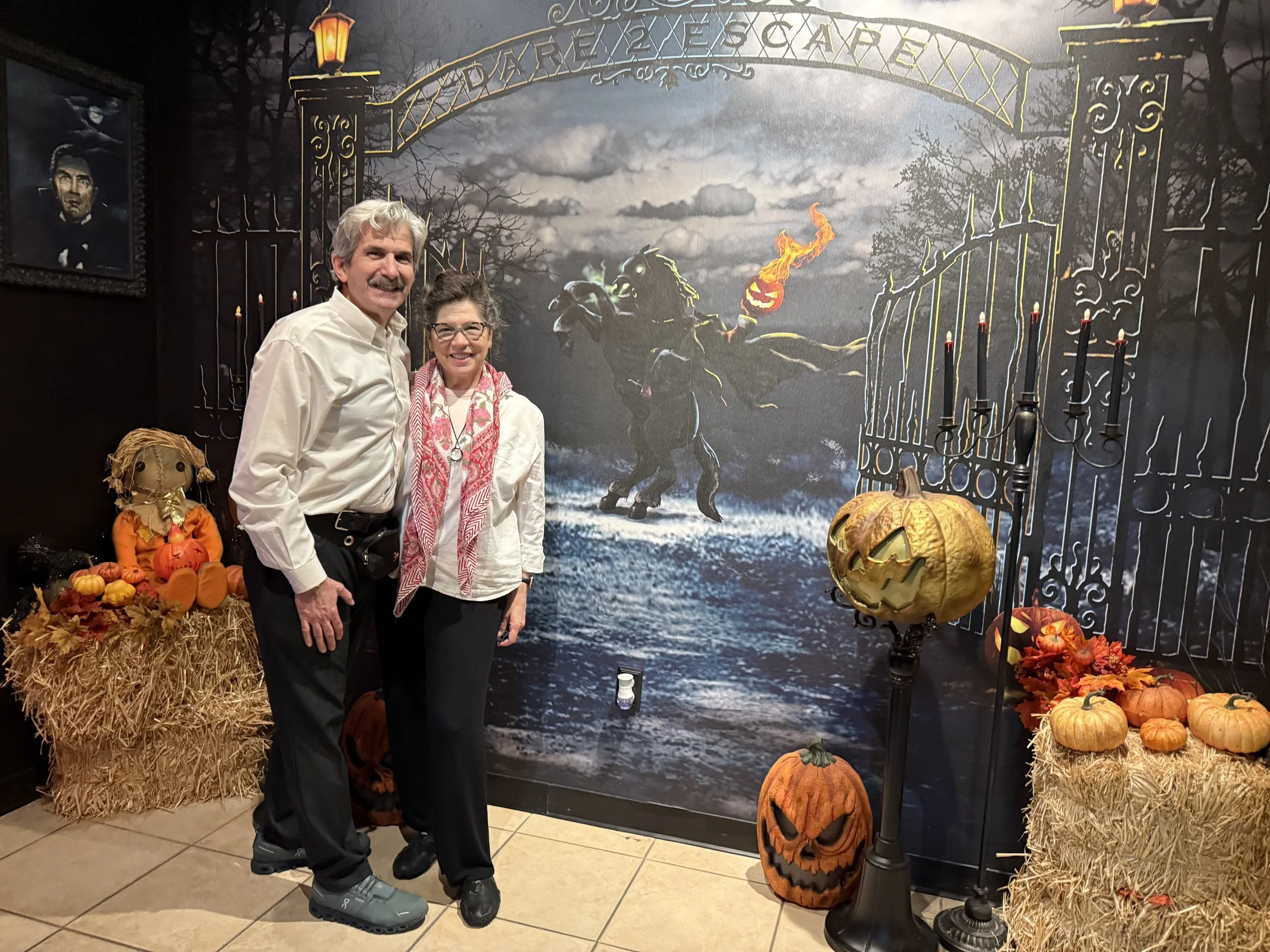
Review: The Seventh Room, Dare 2 Escape, Orlando
Fun Factor: 7
Dare2Escape
5041 W Irlo Bronson Memorial Hwy, Kissimmee, FL 34746 (Orlando area)
Date Played: June 15, 2026
Booking Size: 2 to 6 players — we recommend 4
Game Time: 105 minutes
Difficulty: Advanced
Horror Theme: Yes — dark lighting, moments of heightened tension, jump scares, actor interaction, and one player will be separated from the group for a time.
Objective
After moving into a six-room house that the locals have always avoided, your family discovers a hidden doorway behind the pantry wall. The passage leads to a locked door—and beyond it, a basement that was never supposed to be part of the house. Unfortunately, an unseen force has no intention of letting you walk away. Pulled down the stairs and trapped in the darkness, your team must explore the house’s newly discovered Seventh Room, uncover what happened there, and find a way out.

Our Experience
We had fun playing The Seventh Room at Dare 2 Escape in Orlando, and we recommend it with a Fun Factor of 7.
That Fun Factor is based on the room’s immersive and highly detailed set, the substantial amount of puzzle content, the consistent storyline, several unusual interactions with the props, and an environment that is fun to explore both horizontally and vertically. There is plenty to do and explore in the 105 minute room.
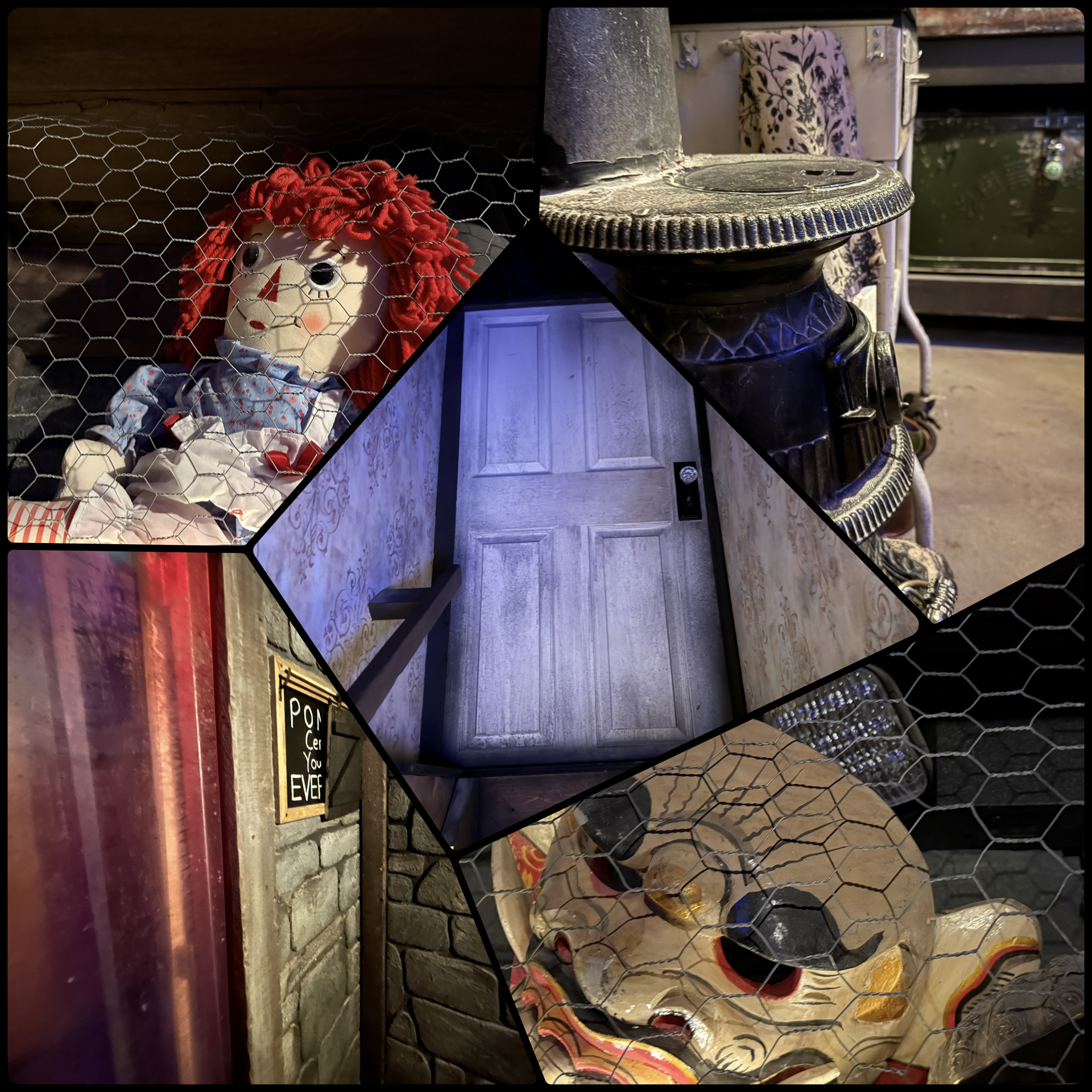
The Seventh Room is also a genuinely horror-themed experience. Players should expect darkness, tense situations, jump scares, interaction with an actor, and a period when one member of the team is separated from the others.
What Kind of Horror Is It?
Horror escape rooms can create fear in very different ways. Some rely heavily on blood and gore, loud noises, constant jump scares, or being chased by a serial killer, monster, or zombie.
The Seventh Room takes a somewhat more nuanced approach.
There are certainly moments of darkness, sudden scares, and direct interaction. However, much of the horror comes from an intense psychologicalyl weighted atmosphere that the room places you in, and the uneasy feeling that something may be nearby even when nothing is actively happening.
As we say here at Fun Factor, judging a room’s horror factor is a little bit like answering a question about how spicy a food is. A lot depends on personal preferance and tollerance.. That does not mean this is “horror light.” The Seventh Room is absolutely an actively scary horror room, and players who strongly dislike being frightened should take that seriously. It simply creates much of its tension without relying exclusively on the more aggressive blood-and-gore style of horror.
Set and Exploration
Exploring and interacting with the set is the highlight of The Seventh Room.
We particularly enjoy escape rooms that make us forget we are playing inside a commercial building or strip mall. Here, the moment we entered the game, we were transported to a very specific place that felt far removed from Orlando’s theme parks.
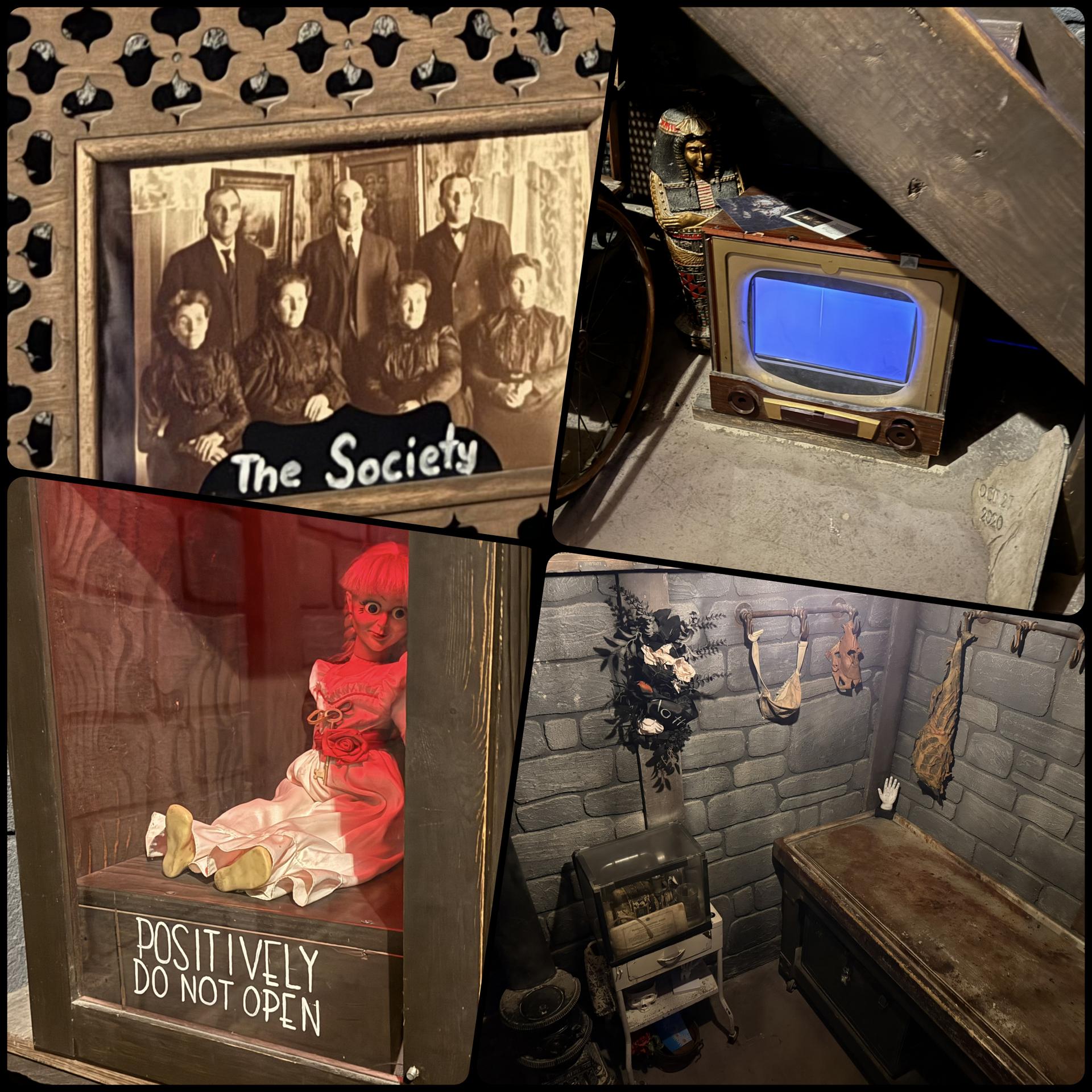
The set is well decorated, consistently on theme, and filled with enhanced details that reward careful observation. Its production values are well above average for an escape room, and Dare 2 Escape was kind enough to let us photograph and record selected areas. As usual, we will not show spoilers or puzzle solutions, but the footage should give you a sense of the environment and the quality of the set.
The space also offers more physical exploration than the average escape room. Players may need to climb, descend, crawl, or enter smaller areas as the game progresses.
Dare 2 Escape notes that the room contains areas some players may find physically challenging, including stairs, and that alternative passages and additional lighting are available upon request.
We always appreciate the option of additional lighting. It not only helps players see the details more clearly, but also feels reasonable within the scenario. If we were knowingly exploring a hidden and potentially haunted area of our house, we would probably bring a flashlight too.
Puzzle Style and Game Flow
The Seventh Room contains a lot of puzzles.
The game unfolds in three fairly distinct acts, each offering some nonlinear elements that allow players to divide and conquer. That ability to split up is important because, despite the unusually generous 105-minute game time, the minutes move quickly. We found the game flow in the first act seemed to drag a bit - it took a while for the momentum and flow to hit its stride. The pace picked up nicely and the game unfolded in satisfying and fun ways. I suspect the flow is better synced for a group of 4. so keep that in mind when considering our experience.
Players will need to explore carefully, communicate what they find, keep track of unused objects and information, and remember which locks or containers remain unopened. The puzzles were varied and many included a tactile manipulation element – you will find a variety of escape room puzzle types – observation, logic, association and several story-driven tasks. The puzzles were generally themed well and used the props in a way that felt organic for theme – there was just one puzzle that was clean but a bit too paper-focused for me.
Searching and scavenging are also significant parts of the experience. Important details are spread throughout the game, and information found earlier may become relevant considerably later.
Paper and pencils were available, which scored points with us. With this much content, keeping notes can prevent combinations, names, symbols, and other useful information from disappearing into the haunted-house portion of your brain.
We still managed one humorous breakdown in communication. We found a combination but temporarily forgot about the container we had already seen—and probably mentioned several times—that it was intended to open. Eventually, our game host gave us a nudge, and we reunited the combination with its temporarily lost lock.
A Brief Prop Frustration
Early in the game, we encountered two containers that were intended to open but required more pressure than either of us initially felt comfortable applying.
Laura and I tend to be cautious with escape room props. We do not want to break something, damage the set, or accidentally take a room offline for the players coming after us. Even after being told that we could use additional force, we took turns trying to open the containers and became a little frustrated. In this case, the intended challenge was really what to do with the contents—not the physical act of getting the containers open. Reducing that resistance would have improved the game flow for us.
The payoff, however, was excellent and right on theme with the story! The use of the contents blew my mind in way that I honestly did not expect to work—until it worked elegantly and revealed a combination. It was one of several interactions that helped make the room feel distinctive.
The Finale
The finale brings together clues, facts, observations, and deductions collected throughout the game. We enjoyed the mechanics of the puzzle as its tactile handling of the props made the puzzle feel like part of the environment and provided a satisfying conclusion to the substantial amount of searching and information gathering that came before it.
Recommended Team Size
The Seventh Room can be booked by teams of two to six players.
An experienced duo can play it—we did—but two players should expect a considerable challenge because of the high puzzle count, the amount of searching, and the need to retain information for the final metapuzzle.
We believe four players is the ideal team size to maximize fun. That gives the group enough people to divide and conquer during the nonlinear portions without making some of the smaller spaces feel unnecessarily crowded.
Three experienced players should also be a reasonable choice. Five or six may provide additional searching power, but portions of the set could feel crowded.
Final Thoughts
The Seventh Room combines an atmospheric horror experience with a substantial puzzle game.
Its greatest strengths are the immersive set, the physical exploration, the unusual prop interactions, and the sheer amount of content packed into its 105-minute running time. The horror relies heavily on atmosphere and psychological tension, but there are still darker and more intense moments that players should not underestimate.
This would be an especially good game to play during the Halloween season, although its strong set and puzzle content make it worth playing at any time of year.
We have played several games at Dare 2 Escape and can also recommend At the Hop, The Archive, and The Video Store. Of those, The Archive remains our personal favorite.
If you play The Seventh Room at Dare 2 Escape in Orlando, please let them know that you saw the room on Fun Factor Escape Room Reviews.
And drop us a note—we would love to hear what you thought.
Until next time, keep escaping…and remember: always count the rooms before you sign the mortgage—and have fun!