
Fun Factor: 8
The Disappearance at Fogmore Manor
7990 Dagget St. Suite A-10, San Diego, Ca, 92111.
Date we played: July 30, 2026
Booking size 3 to 6; We recommend 3 or 4
Game time: 60 minutes
Horror Theme: No. Mildly spooky moments and vibe. Brief periods of darkness.
Difficulty: Advanced
Objective
In part one of the Fogmore saga, you open your eyes in a dark manor drawing room, surrounded by mysterious artifacts. Your business partner has disappeared, leaving a trail for you to follow. There may be spirits inhabiting those antiques—but are they helping you escape or trying to keep you there? You have 60 minutes to investigate before the clock strikes midnight and your partner’s fate becomes your own.

Our Experience
We had a lot of fun playing The Disappearance at Fogmore Manor, at The Entrapment and we highly recommend it with a Fun Factor of 8. That Fun Factor is based on an atmospheric setting, an exceptionally effective story introduction, and a generous collection of puzzles featuring hands-on interactions that sometimes surprised even us. The Fun Factor of 8 rating was a close call, but at the end of the day we highly recommend this room - please keep reading for the full picture.
A Real Story
Our adventure began in an antique shop, where one of the shopkeepers showed us a recorded video message they received from an associate. The video introduced the mystery and gave us a reason to investigate Fogmore Manor. This wasn’t simply a briefing about what to do once someone opened the escape room door. It felt like the beginning of an unfolding story—and we were about to become part of it.
The video deserves special recognition. It really felt like a video message that someone would send…and that we were being asked to see it in order to help out the shop owner. It ranks among the best story-setting introductions we have seen in more than 800 escape rooms around the world. The presentation was convincing, the mystery was intriguing and real, and the connection between the story and our upcoming activities was clear. It really created a clear sense of a mission we needed to accomplish.
Antiques With a Few Surprises
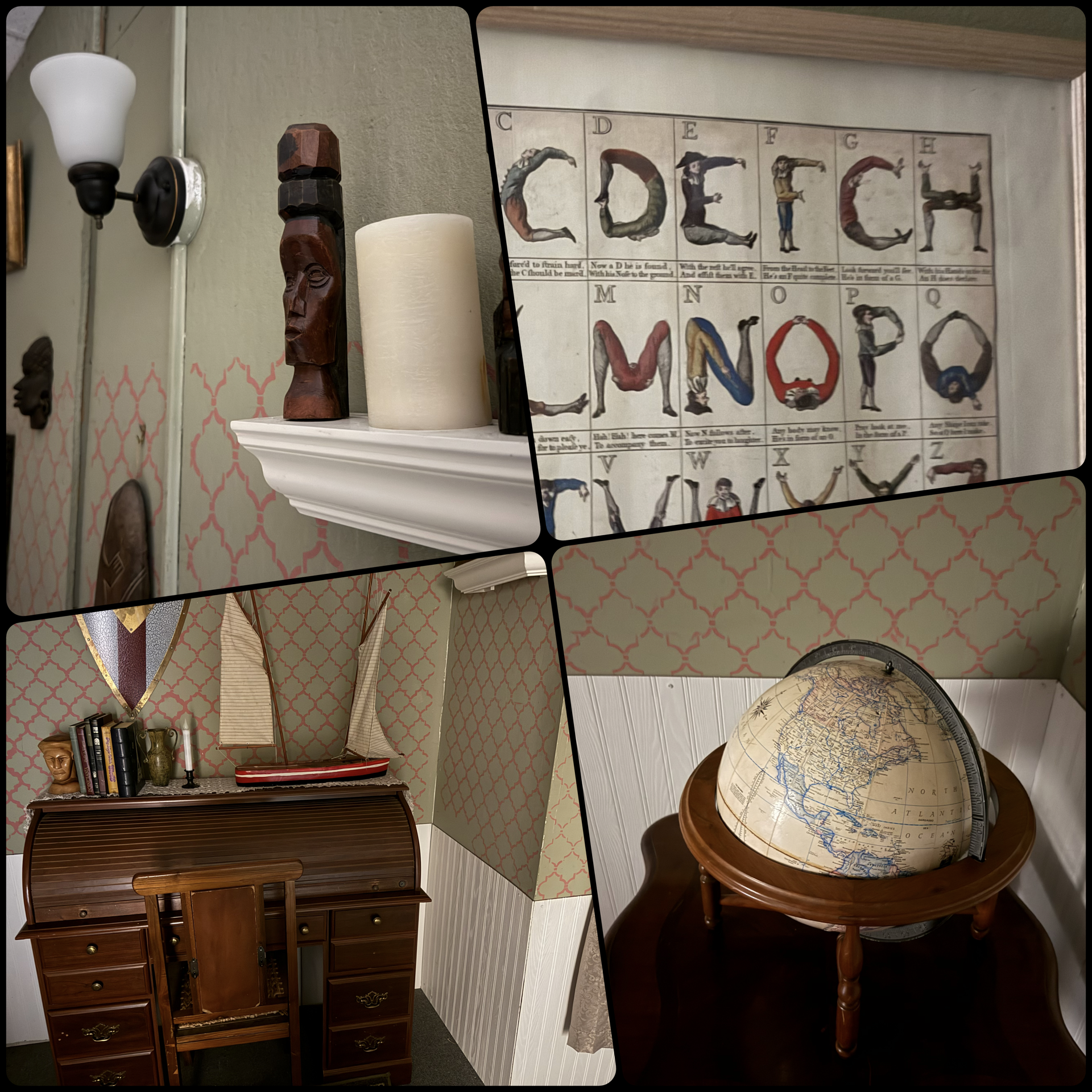
The set convincingly evokes the drawing room of an ornate old estate. We had a real location to explore. Its furnishings, artifacts, and eerie atmosphere work together, and the custom props are more than decorations. We enjoyed handling and interacting with them, sometimes in ways we hadn’t encountered before.
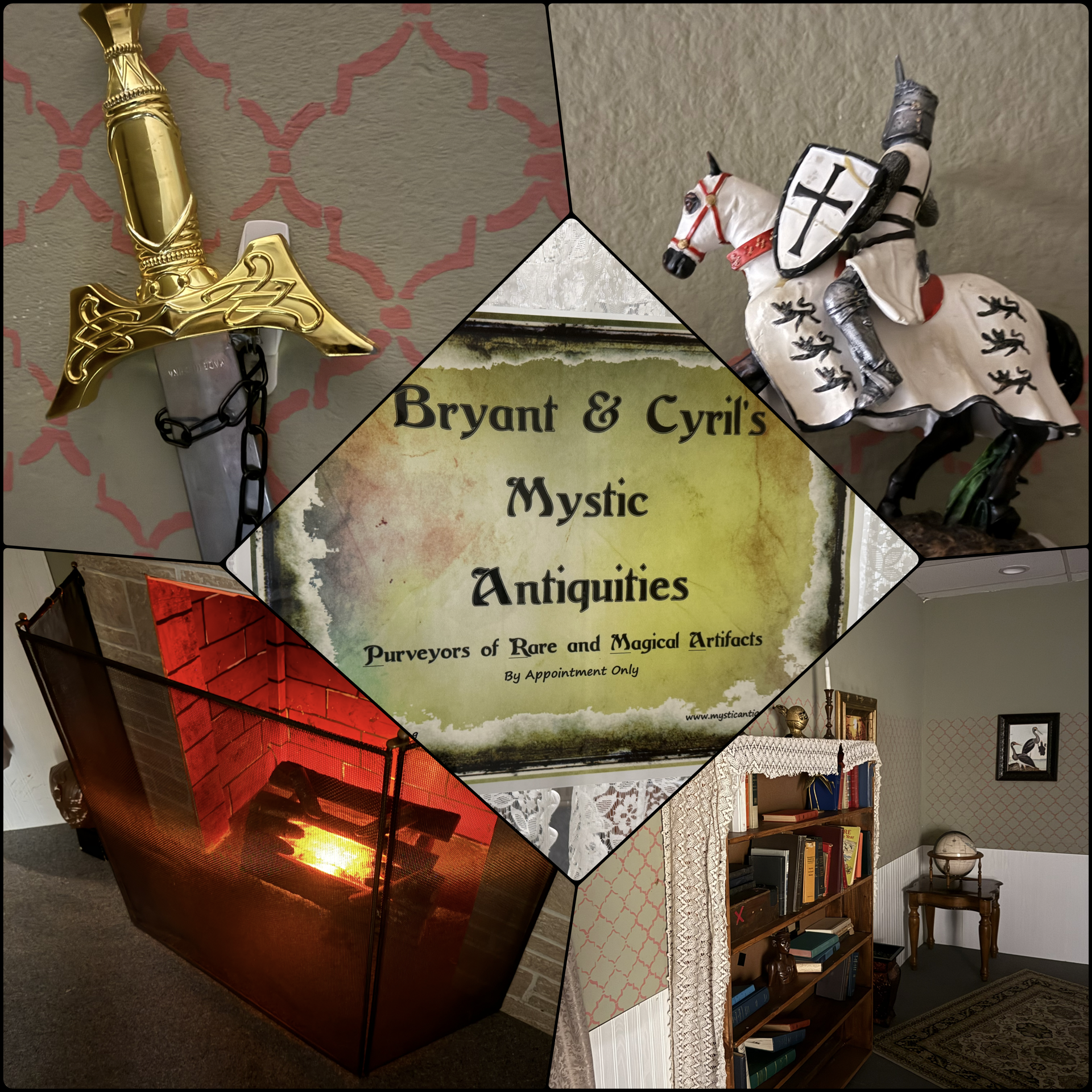
Technology supports those interactions without feeling out of place. Rather than thinking about the electronics making something happen, we felt as though we were discovering what these supposedly spirit-inhabited objects could do. For a room that was already around before we started playing in 2017, both the set and the puzzle ideas hold up well.
Even the countdown belongs to the story: a grandfather clock marks the approach of midnight. It’s a fitting way to remind you that your visit to the manor shouldn’t become a permanent arrangement.
One Puzzle at a Time—and Plenty of Them
Fogmore Manor is very linear: one puzzle leads to the next. Our host emphasized this before we began, along with another important instruction: read the written material aloud, carefully, and all the way to the end.
But this advice is essential. The material establishes what you are trying to accomplish and how the artifacts operate. There are plenty of interesting things competing for your attention, but exploring something before its turn can send you away from the task at hand. And with so much puzzle content there is not much cushion to linger in.
We quickly got into a groove when we generally understood how one discovery led to the next. Solve something, uncover more information, investigate the next object, and continue the story. There was a satisfying sense that the room kept giving us more to do.
The variety includes observation, making connections, riddles, and physical interactions with the props. Some sequences also benefit from teammates coordinating their efforts rather than everyone independently hunting for a different puzzle. I appreciate a good riddle even if I am not great in solving them so bring your riddle-solving friends—they’ll have work to do! We particularly enjoyed the succession of discoveries that seemed to keep producing another thing to investigate.
Some interactions require following fairly explicit instructions. We enjoyed seeing what the objects would do, but players who prefer more open-ended experimentation may find that structure less appealing. The linear format is also why we recommend three or four players rather than filling the room to its six-player capacity.
One practical suggestion: keep your props organized. There are plenty of objects, notes, boxes, and locks to manage, and your investigation can become harder if everything ends up in one growing pile. We spent some of our time sorting out our own collection of discoveries. The manor has enough mysteries without adding “Where did we put that?”
A Lot to Fit Into Sixty Minutes
There is a substantial amount of content here, and we found the 60-minute limit challenging. Our experienced team needed additional time, which The Entrapment generously allowed us so we could finish. We appreciated that kindness, but extra time shouldn’t be part of anyone’s game plan. There is genuinely a lot of puzzle content here – we are not too proud to ask for a hint – our rule of thumb is like waiting for the popcorn to stop popping before opening the microwave. For us the popcorn never really stopped we kept making progress and still…we were time-challenged.
Regular readers know that we like to savor an escape room rather than race through it. Even without any prolonged standstills, we ran short of time. In our view, 70 or 75 minutes would give this experience more room to breathe and increase the fun. Honestly, the content is there, and I would pay more for an extended-time room.
To keep us moving, our game host’s nudges, mostly unsolicited, reminded us to our eye on the material. We understood the intention, especially given how much content we had to get through. Still, some felt like interruptions that took us out of the moment — we would have preferred a little more time to explore, experiment, and make the connections ourselves before another reminder to reread what we were given. For us, that discovery process is part of the fun.
A Small Blacklight Grumble
Regular readers also know that handheld blacklights are a pet peeve of ours. No argument, however, that revealing invisible writing can be fun; figuring out where to point the blacklight and what to illuminate and when can be less so. Then there is the practical matter of whether the light is bright enough to reveal what you’re supposed to see.
During our game, the blacklight we had been provided faded enough that we couldn’t initially find some relevant information. A stronger light, bought in upon request, made all the difference. This was a minor bump, but it is worth mentioning: sometimes the mystery isn’t the clue—it’s the battery.
Final Thoughts
The Disappearance at Fogmore Manor earns our Fun Factor of 8 for its immersive atmosphere, outstanding story introduction, varied tactile puzzles, and generous amount of content. Its tightly sequenced structure and emphasis on careful reading won’t suit every playing style, and we would have enjoyed a little more time to take it all in. But the story and the unusual interactions with its artifacts gave us plenty to enjoy.
As always, we only recommend escape rooms when we had fun playing them—and we had fun playing The Disappearance at Fogmore Manor!
When you visit, please let The Entrapment know you saw our Fun Factor Escape Room Review.

Until next time, keep escaping, mind you manor and keep your spirits up…
…and have fun!
And please drop us a note—we always love hearing about your adventures.